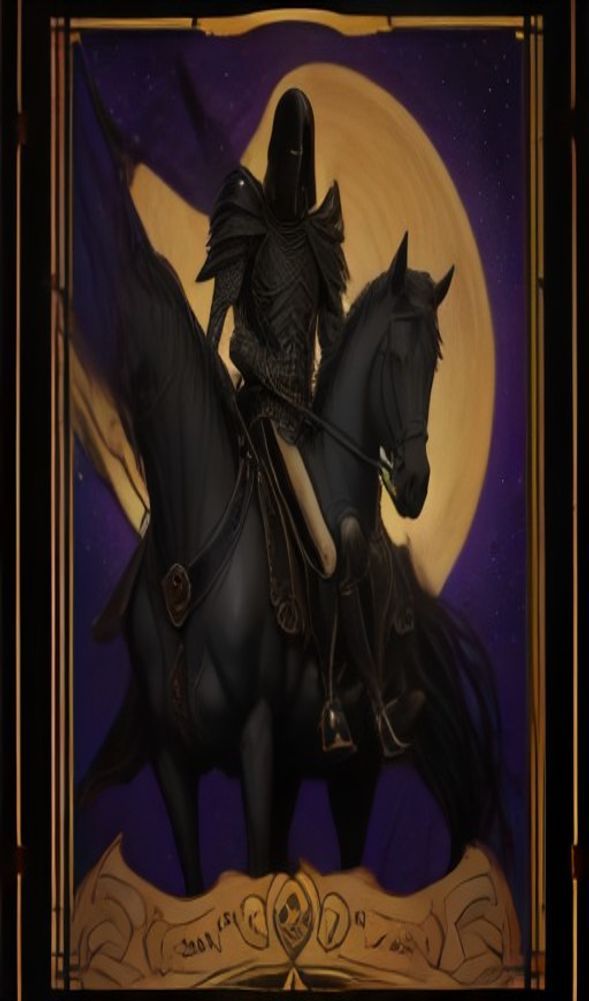
Death
The Transformer
“You don’t fear endings. You schedule them.”
Death meaning at a glance
Death means a real ending, not a literal one — a chapter that has to close before the next thing can start. Upright, it points to endings, transitions, and the honest recognition that something has run its course. Reversed, it points to stalling: resisting a change that has already begun, staying in a form of life that has quietly stopped working.
Death upright meaning
Death is the card of the threshold, not the funeral. When it turns up, it usually names something you already half know: a job, a relationship, an identity, or a way of living has reached its natural finish. This is not punishment. It is closer to weather. Autumn does not fail the tree by dropping its leaves. Something in your life is doing the same ordinary, necessary thing, and the card is simply naming it out loud instead of letting you keep pretending otherwise.
Where it lands in a reading, Death usually marks a genuine turning point rather than a small adjustment. This is bigger than a bad week. It can mean a relationship that has to end for either person to grow, a career identity you have outgrown, a belief about yourself that no longer holds, or a literal loss that reshapes what comes next. For a man in the reading's context, it can point to losing a mentor or supporter. For a woman, it often signals a run of contrary, frustrating circumstances rather than one clean event. For someone anticipating marriage or commitment, it can mean those particular plans stall or fail, even if something else eventually replaces them.
The action this card asks for is simple to say and hard to do: stop performing resuscitation on something that has already died. That might mean finally naming a relationship as over, leaving a role you have outgrown, or admitting a plan is not coming back. Grieving is allowed and expected. What the card discourages is spending months trying to reanimate what is finished instead of letting the ending do its work.
Death reversed meaning
Death reversed is not a worse version of the upright card, and it is not a promise that you dodged the ending. What it actually describes is stuckness: inertia, a kind of waking sleep where change is needed but nothing moves. Nothing has died here. Something has gone numb, and the numbness is doing more damage than the ending itself would.
This position often shows up when a necessary transition has been delayed past its natural point. You know the relationship is over, or the job is wrong, or the old identity does not fit, but you keep functioning inside it anyway, on autopilot, hoping the discomfort will resolve itself without you having to act. It can also describe hope that has been worn down until it stopped counting as hope, more like resignation dressed up as patience.
The corrective here is motion, even small motion. Somnambulism ends the moment you notice you are asleep. That can be one honest conversation, one application sent, one boundary finally stated. The card is not asking for a dramatic reinvention overnight. It is asking you to stop sleepwalking through an ending that has already started and simply let yourself wake up enough to take the next real step.
Death: yes or no?
For most direct questions, Death leans no, but not because the answer is bleak. It signals that the thing being asked about is ending, changing form, or giving way to something else rather than continuing as it currently is. If the question is about whether a specific plan, job offer, or relationship will continue unchanged, this card usually says it will not. If the question is about whether change or a fresh start is coming, flip the read: this is one of the clearest yes cards for transformation, just not for preservation.
Death as feelings
Upright
As feelings, Death upright suggests this person is in the middle of an internal shift regarding you, not necessarily pulling away from you specifically. They may be shedding an old version of themselves, an old relationship pattern, or an old fear, and you are somewhere in that process. It can feel unsettling to be around, but it is not automatically an ending of you two. It often means the connection has to change shape to survive.
Reversed
Reversed, this card suggests someone who feels stuck regarding their feelings for you, caught between knowing something needs to change and refusing to move. They may seem checked out, low-energy, or noncommittal, not because they feel nothing but because acting on the feeling would require ending something else first. Patience helps here more than pressure, but so does honesty about how long you are willing to wait for them to wake up.
Death in love
Upright
In love, Death upright often marks the real end of a chapter, sometimes the relationship itself, sometimes just an old pattern within it, like constant conflict or dishonesty. For couples, it can mean the relationship as it was cannot continue, though a more honest version might follow if both people are willing to let the old one go. For singles, it frequently clears space by ending a dynamic, a type, or a habit that was quietly blocking anything real from arriving.
Reversed
Reversed in love, this card describes relationships or single life stuck in a holding pattern, going through the motions of connection or hope without genuine forward motion. Couples may be maintaining a relationship that both people privately know has already ended in spirit. Singles may be nursing a hope that has gone cold, still checking a phone that stopped meaning anything. The remedy is a real decision, not another season of waiting to see.
Death in career
In career readings, Death usually points to genuine transitions rather than small setbacks: a role ending, a company restructuring, a field you are finally ready to leave, or an identity as a worker that no longer fits who you have become. It favors people doing change management, closing out projects honestly, or making art and work that names hard truths without flinching.
Upright, expect an ending that clears the way, even if it does not feel like relief right away. Reversed, watch for a job or role you have outgrown that you keep maintaining anyway, out of fear rather than genuine fit. The move in either direction is the same: stop propping up what has already finished, and let the actual next chapter begin on its own timeline.
As a birth card
You are built for metamorphosis. Where others cling, you compost — old identities, dead relationships, finished chapters all become soil in your hands. People find your honesty about endings unsettling, then liberating.
Frequently asked questions
Is Death a good card to get?
It is neither good nor bad by default. It signals a real ending or transformation, which is often painful in the moment but frequently clears space for something more honest. Context and surrounding cards determine whether the ending is a relief or a genuine loss.
What does Death mean for someone thinking of you?
It suggests you are connected, in their mind, to change: you may represent an ending they need, a transformation they are undergoing, or a part of their life they know cannot continue as it is. Reversed, they may be thinking of you while feeling stuck, unable to act on what they know needs to shift.
Is Death a yes or no card?
Generally no for questions about continuity, since it points to endings and transformation rather than preservation. It becomes a strong yes if the actual question is about whether change, a fresh start, or an ending is coming.
Does Death always mean something bad is going to happen?
No. It almost never refers to literal death. It describes an ending, a transition, or the closing of a chapter, situations that are frequently uncomfortable but not disasters. The card names change, not doom.
What does Death reversed mean specifically?
It points to stagnation rather than an ending: inertia, exhaustion, or hope that has quietly gone dormant. A change that needs to happen is being delayed or resisted, and the card is asking you to notice where you have gone numb instead of acting.
Which card are you? Take the 60-second test
Find my card